Equipment Financing With Bad Credit: What Actually Gets Approved
Equipment financing is the most forgiving credit product in business lending, and the reason is structural: the lender holds a lien on a machine that has a resale market. When credit is weak, the asset does the arguing.
That does not make a low score irrelevant. It changes what the approval looks like — more money down, a shorter term, a higher rate — rather than whether an approval exists at all.
Key Takeaways
- Equipment deals are collateralized, so approvals happen well below the credit thresholds that gate unsecured lending.
- Scores in the mid-500s can still fund with a larger down payment, typically 10% to 25%, and a shorter term.
- Titled, liquid assets — trucks, trailers, excavators, forklifts — get better treatment than specialized or soft-cost-heavy equipment.
- Time in business, deposit consistency, and industry experience frequently outweigh the score itself.
- A specific unit with a real invoice or auction lot moves faster than an open-ended "we need equipment" request.
Why the Asset Changes the Math
In an unsecured loan, the lender's only recovery path is the borrower's promise. In an equipment deal, there is a machine with an auction value, a serial number, and a documented resale market. If the loan defaults in year two, the lender repossesses and sells.
That recovery path is why a 560 score can fund equipment while the same score gets declined for an unsecured line. The lender is pricing the gap between what they lend and what the unit will bring at auction — which is exactly why the down payment goes up as credit goes down.
What Lenders Actually Weigh
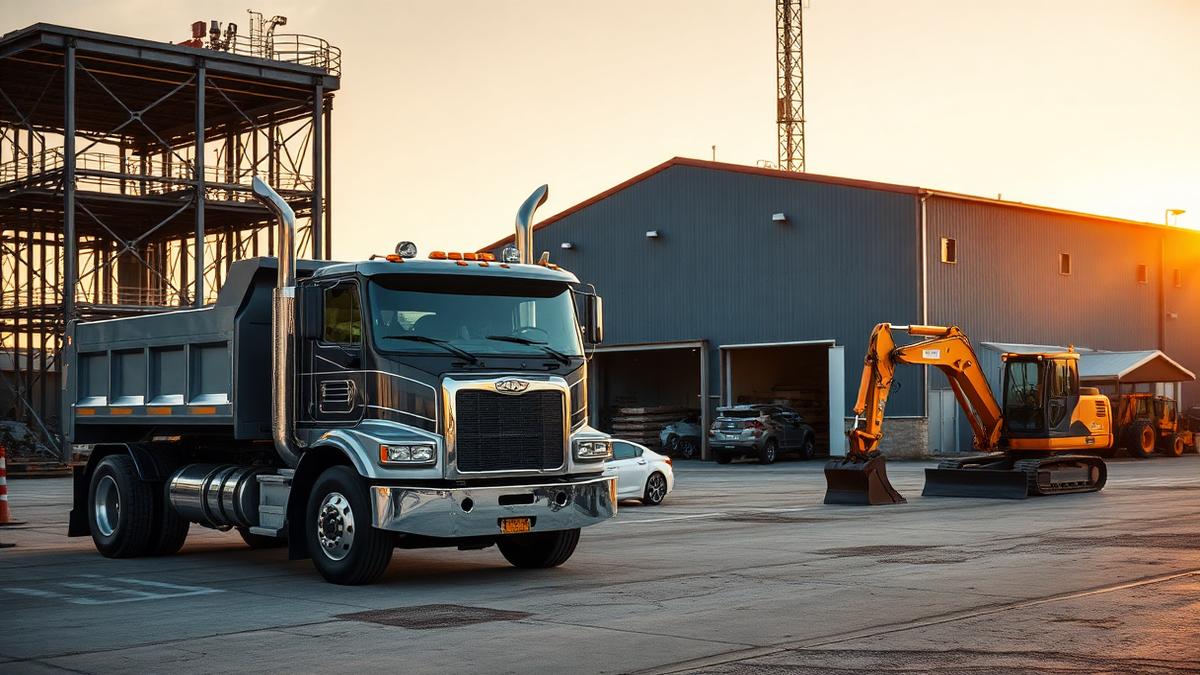
- The asset class. A tri-axle dump truck, a late-model excavator, or a forklift has thousands of comparable sales. A custom-integrated production line does not. Liquidity of the collateral drives the advance rate.
- Age and hours. Most lenders cap financeable age around 10 to 15 years for titled equipment. Hours and mileage matter as much as model year.
- Time in business. Two years operating history offsets a great deal of credit damage. Under six months and you are in startup territory, where a personal guarantee and a larger deposit are standard.
- Bank statements. Three to six months. Consistent deposits and few negative days can carry a file that the score alone would sink.
- Why the credit is bad. A medical collection or a single stretch during a downturn reads very differently than a recent business bankruptcy or an open tax lien with no payment plan.
Realistic Structures by Credit Band
| Credit profile | Typical down payment | Typical term | What to expect |
|---|---|---|---|
| **680+** | 0% – 10% | 36 – 72 months | Best pricing, minimal documentation, fast approvals |
| **620 – 679** | 5% – 15% | 36 – 60 months | Strong approval odds with clean bank statements |
| **560 – 619** | 10% – 25% | 24 – 48 months | Approvable on liquid asset classes; expect a PG |
| **Below 560** | 20% – 30%+ | 24 – 36 months | Possible on titled, in-demand equipment with real history |
These are working ranges, not quotes. A strong asset with weak credit and a strong deposit history frequently prices better than the table suggests; the reverse is also true.
What Kills a Deal That Otherwise Works
Certain items do more damage than the score: an open federal or state tax lien with no payment plan, a bankruptcy discharged within the last twelve months, recent repossessions in the same asset class, and consistent negative bank days. Each is addressable, but they need to be disclosed on day one. A lien discovered in week two costs you the deal and the time.
How to Improve the Terms Before You Apply
- Bring a specific unit. An invoice, a VIN or serial number, hours or mileage, and photos. Specificity is the single fastest thing you can control.
- Fix the bank statements first. Sixty to ninety days without negative days materially changes the offer.
- Increase the down payment. Every additional 5% down reduces the lender's exposure and moves the rate.
- Have a payment plan on any tax lien. An IRS installment agreement with a few months of on-time payments converts a hard decline into a workable file.
- Show the revenue the equipment creates. A signed contract or committed route that the machine services is real underwriting evidence, not a pitch.
A Worked Example
An owner-operator expanding to a second truck came in with a 574 score from a two-year-old business credit issue, 18 months in business, and clean bank statements over the prior six months. The unit was a 2019 tri-axle dump with 210,000 miles and a dealer invoice at $92,000.
The structure that funded: 20% down ($18,400), a 42-month term on the $73,600 balance, personal guarantee, first payment 30 days out. Approval came in under 48 hours because the asset was titled, liquid, and specifically identified. The same borrower requesting an unsecured $75,000 line of credit would have been declined outright.
Rebuilding From Here
The practical value of a financed equipment deal with weak credit is not just the machine. Twelve to eighteen months of on-time payments on a reported facility creates the business credit history that unlocks better pricing on the next unit. Owners who finance a first asset at 20% down routinely refinance or purchase the second at 10% down within two years.
The Bottom Line
Bad credit narrows the structure; it rarely closes the door on equipment. Bring a specific, liquid asset, clean bank statements, an honest disclosure of what is on the credit report, and a down payment sized to the risk. Start with equipment financing, or go straight to the asset class you are buying — dump trucks, excavators, or used equipment.

Tzortzis Capital